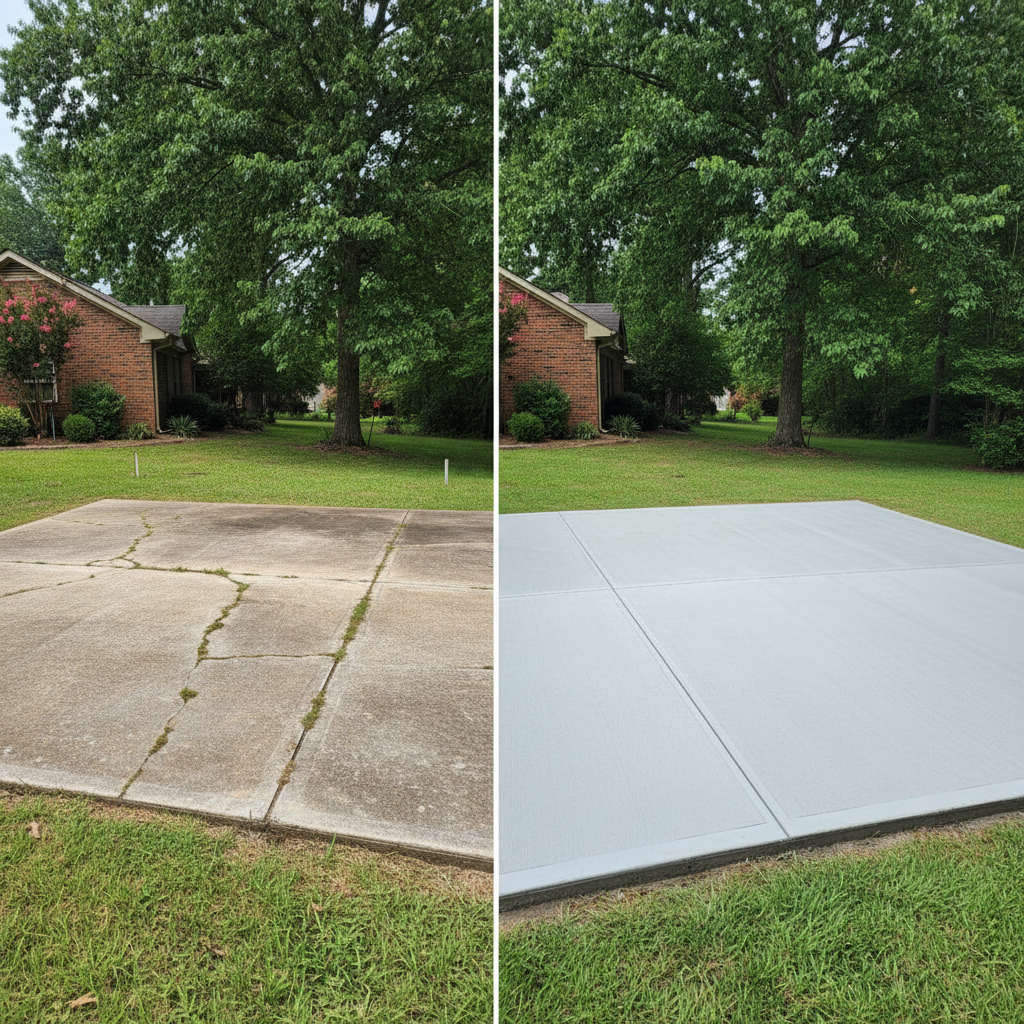
Alright, let's talk about your outdoor spaces. Maybe you're thinking about a new patio, or a driveway, or even just a walkway. You've got options, right? Around Olive Branch, I see homeowners often weighing two big contenders: traditional poured concrete and concrete pavers. Both can look fantastic, but they're not the same thing at all. What works for your neighbor might not be the best fit for you, and that's okay. I'm going to lay out the real deal on both, so you can make a smart choice.
Poured Concrete: The Old Reliable
When most folks picture a driveway or a patio, they're probably seeing poured concrete. It's been around forever, and there's a good reason for that. It's strong, it's dependable, and if it's done right, it lasts a long, long time.
- Cost: Generally, poured concrete is going to be your more budget-friendly option right off the bat. The material itself costs less, and installation usually goes quicker than with pavers, which keeps labor costs down. If you're after a solid, no-frills surface without spending a fortune, this is often the way to go.
- Durability: A concrete slab that's installed correctly – with the right rebar or wire mesh and good drainage – is incredibly tough. It can handle heavy vehicles and those wild Mississippi weather swings pretty well. The big thing to remember, though, is cracking. We do our best to control it with expansion joints, but concrete will crack eventually. It's just what it does.
- Maintenance: Maintenance is pretty low-key. You'll want to seal it every few years to protect it from stains and the elements, and just keep it clean. If you get a crack, though, repairs can stick out a bit. You can patch it up, sure, but it's tough to make that patch blend in perfectly with the original slab.
- Appearance: Standard gray concrete is, well, gray. It gets the job done. But don't forget about decorative options! We can stamp it to look like stone or brick, or even add color. That does add to the cost, obviously, but it gives you a lot more aesthetic flexibility than just plain gray.
Concrete Pavers: So Many Choices, So Much Style
Pavers are individual units, usually made of concrete, that either interlock or are laid really tightly together to create a surface. Think of them like a giant, super heavy-duty jigsaw puzzle for your yard.
- Cost: This is where pavers usually cost more than poured concrete, especially when you factor in installation. Each paver has to be laid one by one on a carefully prepared base of gravel and sand, and that's just more labor. The material itself can also run higher per square foot.
- Durability: Pavers are incredibly tough. Since they're individual pieces, they have a little give. When our clay soil in Olive Branch shifts a bit – and it always does, let's be honest – pavers can move right along with it without cracking in the same way a rigid concrete slab might. This flexibility is a huge plus in our area. They're also super strong, designed to take heavy loads.
- Maintenance: Maintenance is generally pretty easy. If a paver gets damaged or stained, you can usually just pop it out and swap in a new one. That's a big win for repairs that look totally natural. You'll want to sweep sand into the joints every so often to keep them stable, and maybe think about sealing them to stop weeds and stains. Weeds can definitely be a pain between pavers if you don't keep up with them.
- Appearance: This is where pavers really shine for a lot of people. They come in a massive variety of colors, shapes, and patterns. You can truly create custom designs, everything from intricate herringbone patterns to a rustic cobblestone look. They offer a much more upscale, custom feel right from the start.
So, What Do I Suggest for Olive Branch?
Look, both are solid choices, and here at The Branch Concrete, we do both. But if you're asking me for a general recommendation for homeowners around here, especially with our local soil and weather, I often lean towards pavers for patios and walkways, and poured concrete for driveways.
Here's why:
- For patios and walkways, where looks and flexibility are often key, pavers are hard to beat. The way they handle our expansive clay soils and the freeze-thaw cycles we get here in North Mississippi means they're less likely to show the kind of stress cracks you might see in a rigid concrete slab over time. Plus, being able to replace individual units if something goes wrong is a huge advantage for how it looks long-term and for keeping repair costs down.
- For driveways, especially if you've got heavy vehicles, the sheer structural integrity and lower upfront cost of a well-poured, properly reinforced concrete slab often makes it the more practical choice. While cracks can happen, a good concrete driveway is built to take a beating. If budget is your main concern for a big area like a driveway, poured concrete is usually the winner.
Ultimately, it comes down to your budget, what you like the look of, and how you plan to use the space. Give me a call, and we can talk through your specific project. I'll tell you straight what I think will work best for your home and your wallet, no BS.