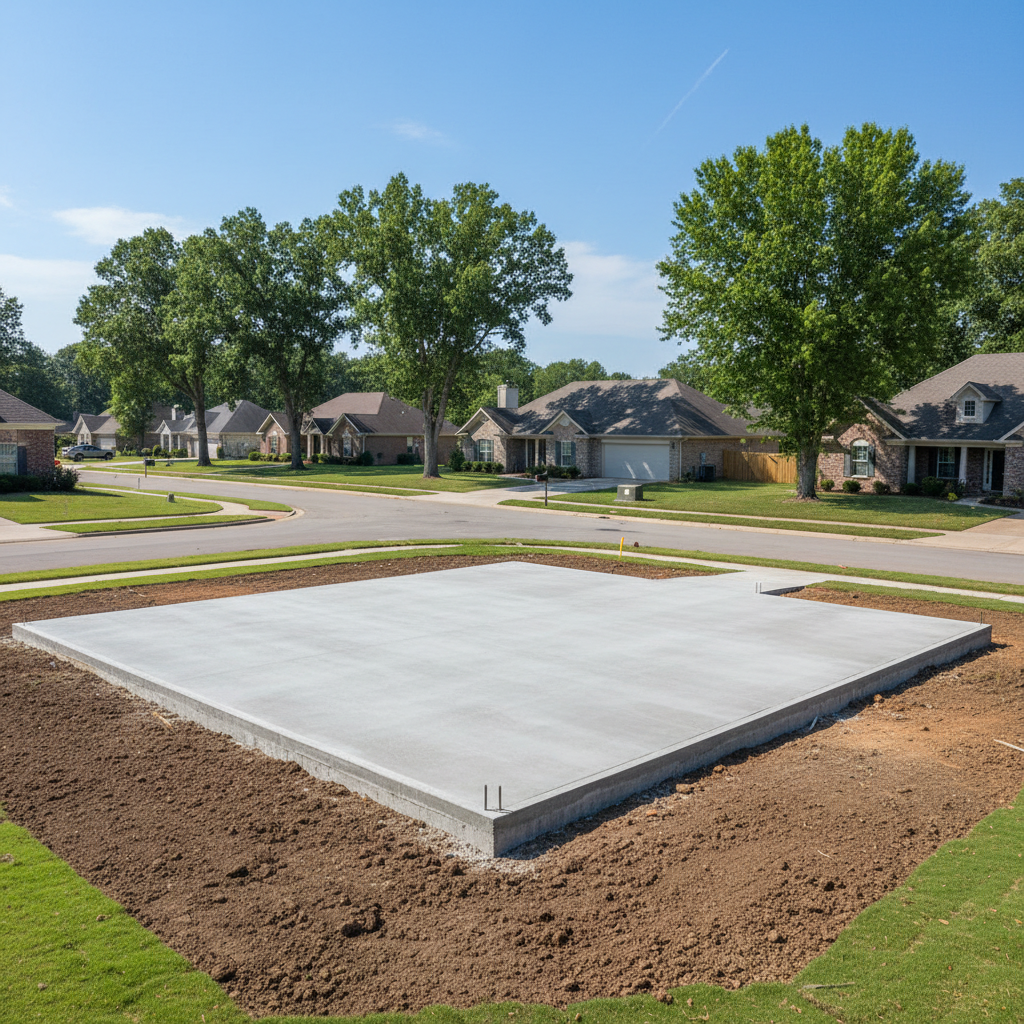
Ever wonder what's really holding up your house? It’s the foundation, plain and simple. And around here in Olive Branch, that foundation has to deal with some specific challenges folks in other parts of the country just don't face. It's not just pouring some concrete and calling it a day; there's a lot more to it, especially if you want it to last.
The Ground Beneath Our Feet: Olive Branch Soil
One of the biggest things I've seen over the years, working on homes from the old historic district near the railroad tracks to the newer developments out towards Byhalia Road, is our soil. We've got a lot of clay around here, and anyone who's tried to dig a garden knows exactly what I'm talking about. This isn't just a nuisance for planting; it's a major factor for foundations.
Clay soil expands when it gets wet and shrinks when it dries out. We get plenty of both here in Mississippi – those heavy summer downpours followed by long, dry spells. This constant shifting can put a real strain on a foundation. If it's not designed and built right, you can end up with cracks, uneven floors, and all sorts of headaches down the road. That's why proper site preparation and understanding the local soil composition are non-negotiable for any foundation work here.
Common Foundation Types We See
Most homes in Olive Branch are built on either a slab-on-grade foundation or a crawl space. Both have their pros and cons, and both need to be done right for our local conditions.
- Slab-on-Grade: This is where we pour the concrete slab directly onto the ground. It's common, pretty cost-effective, and when done well, very durable. But with our expansive clay, you need excellent drainage around the perimeter and often a strong rebar grid inside the slab to handle any ground movement. A good vapor barrier is also key to prevent moisture issues, of course.
- Crawl Space: Many older homes and some newer ones use a crawl space. This involves concrete footings and block walls that support the house, leaving a space underneath. It's great for accessing plumbing and electrical, but you've got to manage moisture and ventilation carefully. I've seen plenty of issues with damp crawl spaces leading to foundation problems if they weren't properly sealed or drained.
Why Local Expertise Isn't Just a Buzzword
You might think concrete is concrete, no matter where you are. And sure, the basic chemistry is the same. But the application, the preparation, and understanding what that concrete needs to endure are entirely local. Someone from up north who's used to sandy loam and freezing temperatures just won't have the same insights into our clay soil, our humid summers, or our heavy rain events.
We know the local building codes, which are often tailored to regional conditions. We know which areas tend to have more drainage issues or higher water tables. We've seen what works and what doesn't work on hundreds of homes right here in Olive Branch, from the older brick ranches in Miller Farms to the newer two-stories in Forest Hill.
When I'm looking at a foundation project, I'm not just thinking about the concrete mix. I'm thinking about the grading of your yard, the path of rainwater, the type of soil we're digging into, and how all those factors will interact with your foundation for decades to come. It's about preventing problems before they start.
Beyond the Pour: Maintenance Matters
Even the best-built foundation needs a little love. Here are a few things I always tell folks:
- Keep an eye on your drainage: Make sure gutters are clean and downspouts direct water at least five feet away from your foundation. Standing water is a foundation's worst enemy, especially with our clay soil.
- Watch for cracks: Small hairline cracks are often normal, but if you see larger cracks (wider than a quarter-inch), stair-step cracks in brick, or doors and windows sticking, it's time to get it checked out.
- Landscaping matters: Don't plant large trees or shrubs too close to your foundation. Their roots can absorb moisture unevenly, leading to soil movement.
Your home is probably the biggest investment you'll ever make. Protecting that investment starts from the ground up, literally. Don't cut corners on your foundation, and make sure you're working with someone who understands the unique challenges of building and maintaining homes right here in Olive Branch. That's what we do at The Branch Concrete – build solid foundations, literally and figuratively, for our neighbors.